


Winter can completely change the way we experience cycling. A familiar commute may suddenly involve wet roads, patches of snow, freezing temperatures and shorter daylight hours. If you rely on your e-bike for everyday journeys or weekend adventures, you might find yourself wondering: can I still ride comfortably when winter arrives?
Choosing the right electric bike for winter is about more than having a powerful motor. Tyre design, braking performance, battery care and the conditions beneath your wheels all play an important role. That's why fat-tyre electric bikes often attract attention when the weather turns colder. But are wider tyres really better for snowy roads, and when might they not be enough?
In this guide, we'll explore what makes a good electric bike for winter, explain where fat tyres can offer practical advantages, and introduce three HITWAY models designed for different riding needs: the BK28, BK6S PLUS and BK10S PRO.
Can I Ride an Electric Bike in Winter?
The arrival of winter doesn't necessarily mean putting your electric bike away until spring. Across Europe, many riders continue commuting, running errands and exploring local routes throughout the colder months. However, winter introduces challenges that can make even familiar journeys feel different.
Before deciding whether to head out, it's worth understanding how cold temperatures, changing road surfaces and reduced daylight can affect your ride. Knowing what to expect is the first step towards making more confident decisions about winter cycling.
What Changes When I Ride in Winter?
Winter brings more than just colder air. Wet leaves, slush, patches of snow and icy surfaces can all affect how your tyres interact with the road. Traction may become less predictable, while stopping distances can increase when the surface is slippery.
Cold temperatures can also reduce the usable capacity of an e-bike battery, meaning a journey that feels comfortable in summer may require more careful range planning in winter. Shorter daylight hours and poor visibility add another consideration, particularly for riders who commute early in the morning or after work.
These changes don't necessarily make winter cycling impractical. They simply mean that familiar routes may require a different approach.
A clear-looking road isn't always ice-free. Bridges, shaded paths and untreated surfaces deserve extra attention.
When Is Winter E-Bike Riding Practical?
Not every winter day presents the same riding conditions. A cold, dry morning on a well-maintained cycle path is very different from a journey through deep snow or across an icy road.
For everyday travel, cleared roads and cycle paths are generally more manageable than routes covered in compacted snow or hidden ice. Light snow may be rideable in some circumstances with suitable tyres, careful speed control and sufficient experience, but conditions can change quickly.
If a route is heavily iced over, visibility is poor or the surface feels unpredictable, postponing the ride or choosing another form of transport may be the safer option.
The goal isn't to ride in every possible condition. It's to recognise when winter cycling is reasonable and when the risks outweigh the benefits.
Does My E-Bike Need Special Winter Features?
You don't necessarily need a completely different electric bike when temperatures drop. However, certain features can make winter riding more manageable.
Tyres suited to the expected surface are especially important because they influence traction, steering and braking. Reliable brakes, effective lighting and appropriate mudguards also become more valuable when roads are wet and daylight is limited.
Battery care matters too. Following the manufacturer's temperature and charging recommendations can help protect the battery during colder months.
For riders who regularly encounter loose snow, gravel or uneven paths, a fat-tyre electric bike may be worth considering. Its wider tyres can offer practical advantages on some softer surfaces, although tyre width alone cannot guarantee grip on ice.
Ultimately, choosing an electric bike for winter means looking at how its features work together rather than relying on one specification alone.
What Should I Look for in a Winter Electric Bike?
Choosing an electric bike for winter isn't simply about finding the most powerful motor or the largest battery. When temperatures fall and road conditions become less predictable, the features that matter most can change. A bike that feels perfectly comfortable on dry summer roads may behave differently on wet paths, loose snow or uneven winter terrain.
So, what should I actually look for? From tyre design and braking performance to battery care and everyday practicality, understanding a few essential features can make it easier to choose an e-bike that suits your winter riding needs.
Tyres
Tyre design and traction on winter surfaces.
What Type of Tyres Should I Choose for Winter?
Tyres are one of the most important considerations because they're the only part of your electric bike in direct contact with the ground.
For cleared roads and everyday city commuting, tyres with suitable tread and rubber compounds may provide the traction you need. If your routes regularly include loose snow, gravel or uneven paths, wider tyres may offer additional benefits by distributing the bike's weight over a larger contact area under suitable conditions.
However, tyre width isn't the whole story. Tread pattern, rubber compound, inflation pressure and surface conditions all influence how a tyre performs. On icy roads, dedicated winter tyres or appropriately approved studded tyres may be more suitable than ordinary fat tyres.
The best choice depends on where you ride, not simply how wide your tyres are.
Brakes
Controlled braking in wet and slippery conditions.
How Important Are Brakes for Winter Riding?
Reliable braking becomes especially important when roads are wet, muddy or slippery.
Hydraulic disc brakes can offer consistent lever feel and useful braking control, while mechanical disc brakes can also perform effectively when properly maintained and adjusted. However, no braking system can overcome a lack of tyre traction.
In winter, the way you brake matters just as much as the components themselves. Reducing speed early, leaving extra stopping distance and avoiding sudden braking can help you maintain control on uncertain surfaces.
When comparing electric bikes, look for a braking system that is appropriate for the bike's weight and intended use, and make sure it is maintained throughout the season.
Battery
Battery capacity and cold-weather care.
How Does Cold Weather Affect My E-Bike Battery?
Cold temperatures can temporarily reduce the energy available from a lithium-ion battery, which may result in shorter riding range compared with milder weather.
For winter use, battery capacity is worth considering, especially if you travel longer distances or regularly carry additional weight. However, a larger battery doesn't eliminate the effects of cold weather.
Good battery care is equally important. Store and charge your battery according to the manufacturer's temperature guidelines, and never charge a battery that is below its permitted charging temperature. If the battery is removable, indoor storage may be convenient where the manufacturer allows it.
Planning your journey with some extra range in reserve is a sensible habit during colder months.
Suspension
Comfort over uneven winter routes.
Do I Need Suspension for Winter Riding?
Suspension can improve comfort when travelling over rough roads, gravel or uneven surfaces by absorbing some of the bumps transmitted through the bike.
Front suspension may be sufficient for many everyday routes, while full suspension can provide additional comfort on more demanding terrain. However, suspension does not automatically improve traction on ice or make unsafe winter conditions suitable for riding.
It's also worth considering the bike's overall weight and handling. A heavier electric bike may feel planted on some surfaces, but it can be more difficult to manoeuvre, lift or recover if traction is lost.
The right balance depends on the routes you use and how you expect to handle the bike in everyday situations.
Other Features Worth Considering
Some of the most useful winter features are also the simplest.
Good front and rear lights help other road users see you during darker mornings and evenings. Mudguards can reduce spray from wet roads and slush, while reflective clothing and accessories can improve visibility.
Practical details such as comfortable controls, suitable luggage options and convenient battery access may also make a difference to daily winter commuting.
Before choosing a bike, think about your usual journeys. Do you ride mainly on cleared city streets, occasionally encounter loose snow, or travel along rougher paths?
Once you understand your typical riding conditions, it becomes easier to see why tyre design deserves a closer look — and why fat-tyre electric bikes are often considered for certain winter routes.
Should I Choose a Fat-Tyre Electric Bike for Snow?
When winter brings snow-covered paths, loose gravel and uneven surfaces, tyre choice can make a noticeable difference to how an electric bike feels beneath you. This is where fat-tyre electric bikes become particularly interesting. Their wider tyres offer a different riding experience from conventional bicycle tyres, especially on softer ground where narrow tyres may sink more easily.
But does having wider tyres automatically mean better grip in winter? Not necessarily. The advantages of fat tyres depend on the surface, tyre pressure, tread design and riding conditions. Understanding how these factors work together can help you decide whether a fat-tyre electric bike is the right choice for your winter journeys.
Why Are Fat Tyres Better on Soft Snow?
One of the main advantages of fat tyres is their ability to spread the combined weight of the bike and rider over a relatively large contact area when inflated appropriately.
On soft snow, this can help reduce how deeply the tyres sink into the surface. Instead of cutting through loose ground as easily as a narrower tyre might, a wide tyre can provide greater flotation, making some snowy paths more manageable.
This advantage is particularly relevant on shallow, loose snow and other softer surfaces. However, performance depends on snow depth, tyre pressure, tread pattern and the weight of the bike and rider.
Deep snow, hidden obstacles and heavily compacted or icy surfaces can still make riding difficult, regardless of tyre width.
Can Fat Tyres Make Uneven Winter Routes More Comfortable?
Winter routes may include frozen ruts, gravel, rough paths and uneven surfaces, not just fresh snow.
Fat tyres have a larger air volume than narrower tyres. At the right pressure, they can help absorb small bumps and vibrations, making some rough winter routes more comfortable.
Their wider contact area may also provide better support on loose ground, making fat-tyre electric bikes worth considering for mixed-surface riding.
However, comfort does not guarantee grip. Traction and handling still depend on tyre design and surface conditions, especially on icy or slippery terrain.
How Does Tyre Pressure Affect Riding in Snow?
Tyre pressure plays an important role in how a fat tyre performs.
On suitable soft surfaces, a lower pressure within the manufacturer's permitted range can allow the tyre to deform more and increase its contact area. This may improve flotation and help the tyre conform to uneven ground.
However, reducing pressure too far can create other problems, including poor handling, increased rolling resistance, rim damage or the tyre becoming unstable on the wheel.
The ideal pressure depends on the tyre, rim, rider weight, load and riding conditions. There is no single tyre pressure that works for every fat-tyre electric bike or every snowy route.
Before making adjustments, always check the pressure limits specified by the tyre and bicycle manufacturers.
Balance traction, comfort and handling for the actual surface.
Can compromise handling and increase the risk of tyre or rim damage.
Are Fat Tyres Enough for Riding on Ice?
This is an important distinction: fat tyres and winter tyres are not the same thing.
Although fat tyres can offer advantages on certain soft surfaces, tyre width alone does not provide reliable traction on ice. A wide tyre with an unsuitable rubber compound or tread pattern may still slip on frozen roads.
For regular riding in icy conditions, dedicated winter tyres or compatible studded tyres may offer more appropriate traction, depending on local regulations and manufacturer recommendations.
Even with suitable equipment, ice can remain hazardous. Black ice, frozen corners and sudden changes in surface conditions can make steering and braking unpredictable.
If a route is heavily iced over, avoiding the ride may be the safest decision.
When a route is covered in ice, changing the route or postponing the ride may be safer than relying on tyre width alone.
Is a Fat-Tyre Electric Bike Right for My Winter Riding Needs?
A fat-tyre electric bike may be worth considering if your winter journeys regularly include loose snow, gravel, unpaved paths or uneven surfaces where additional tyre flotation and cushioning could be useful.
If you mainly ride on well-cleared urban roads, a conventional electric bike fitted with suitable winter tyres may be equally practical, and potentially more efficient on firm surfaces.
It's also worth considering the bike's weight, storage requirements and everyday functionality. Wider tyres can add rolling resistance and weight, so the best choice isn't always the bike with the largest tyres.
Ultimately, the right winter e-bike should suit both the conditions you expect to encounter and the way you use your bike throughout the year.
For example, some riders may prioritise everyday comfort and versatility, while others need extra carrying capacity or a folding design for easier storage.
That's where choosing the right type of fat-tyre electric bike becomes just as important as choosing fat tyres themselves.
Discover three HITWAY models designed for different riding needs, from longer journeys to everyday cargo carrying and flexible commuting.
Which HITWAY Fat-Tyre Electric Bike Is Right for My Winter Riding Needs?
Choosing a fat-tyre electric bike is only the beginning. While wider tyres can offer advantages on certain soft or uneven surfaces, the best bike for your winter routine also depends on how far you travel, what you need to carry and where you store your bike afterwards.
A longer countryside ride calls for different features from a quick shopping trip or a daily commute. To help you find the right fit, let's explore three HITWAY fat-tyre electric bikes — the BK28, BK6S PLUS and BK10S PRO — each offering a different combination of comfort, practicality and everyday versatility.

HITWAY BK28: For Longer Rides and Mixed Terrain
If your winter journeys take you beyond familiar city streets, the is worth a closer look. Designed for riders who enjoy longer outings and varied routes, it combines wide tyres, a high-capacity battery and front and rear suspension in one versatile electric bike.
-
20 × 4.5-inch fat tyresExtra flotation and cushioning on suitable loose snow and uneven paths.
-
1200Wh · 80–100 kmSubstantial battery capacity for longer rides; cold weather can reduce actual range.
-
Front + rear suspensionHelps absorb bumps on rough and mixed-terrain routes.
-
Tektro hydraulic disc brakesControlled braking response, with appropriate tyres and careful riding.
-
105.4lbsBest suited to convenient ground-level storage.
HITWAY BK6S PLUS: For Winter Errands and Cargo Carrying
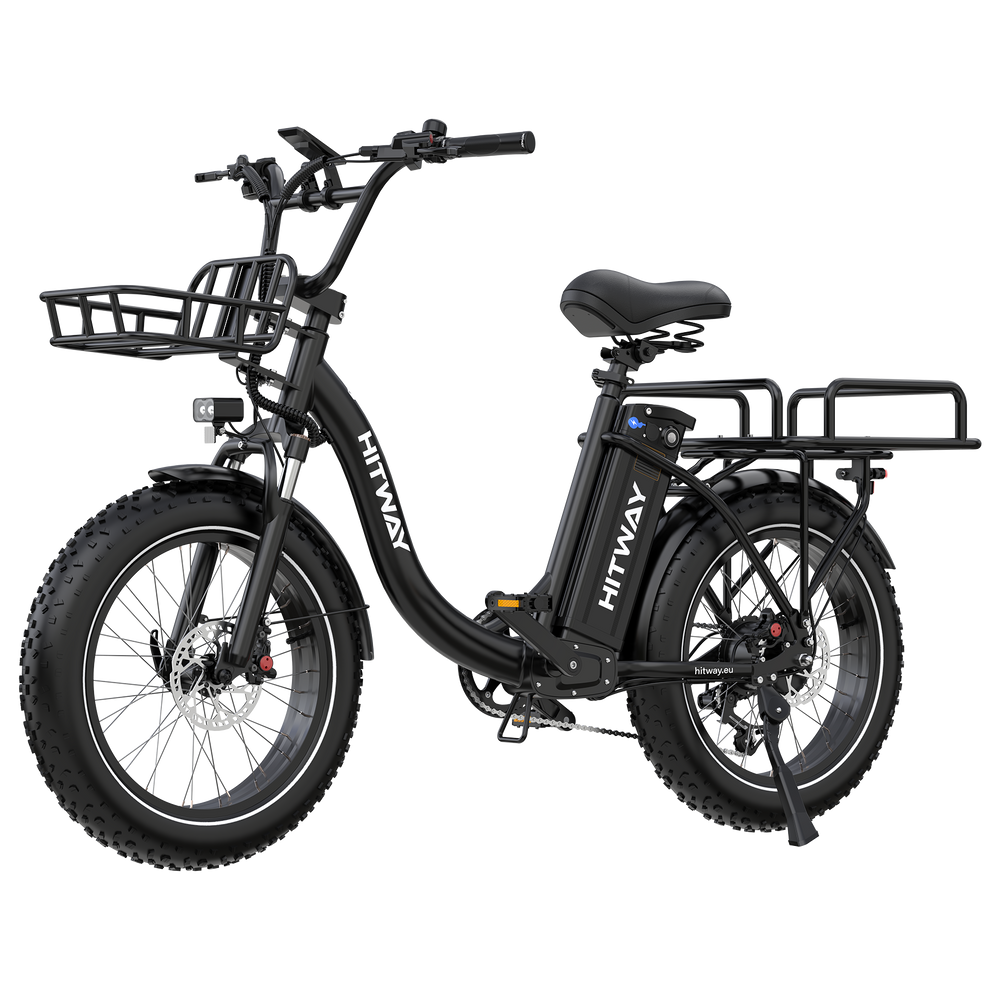
For winter shopping trips and everyday errands, the brings practical cargo carrying to a fat-tyre electric bike. Its low-step frame and baskets make frequent stops and transporting essentials more convenient.
-
20 × 4.0-inch fat tyresExtra cushioning on suitable uneven everyday routes.
-
55.1 lbs front + 77.2 lbs rear basketsCarry groceries and essentials, within the bike’s 385.8 lbs total load limit.
-
1296Wh · 140–160 kmHigh battery capacity for regular journeys; winter conditions may reduce range.
-
80 Nm · torque sensorAssistance responds to pedalling effort, useful when carrying loads.
-
Hydraulic disc brakesHelps manage braking; allow extra stopping distance with cargo.

HITWAY BK10S PRO: For Flexible Commuting and Storage
For commuters who need flexible storage, the combines a folding frame with wide tyres and suspension. It suits riders balancing everyday journeys with limited space at home.
-
20 × 4.0-inch fat tyresHelps cushion rough paths and some uneven winter surfaces.
-
Folding frameTakes up less storage space when not in use.
-
720Wh · 70–120 kmBattery capacity for daily journeys; allow for shorter range in the cold.
-
Front fork + mid-frame shockHelps reduce bumps and vibration on mixed routes.
-
77.1 lbsLightest of these three models, though still heavy to carry.
How Do I Choose Between the HITWAY BK28, BK6S PLUS and BK10S PRO?
Each of these HITWAY fat-tyre electric bikes offers a different way to enjoy everyday riding throughout the colder months. The BK28 focuses on longer journeys and mixed terrain, the BK6S PLUS brings extra carrying capacity to daily errands, and the BK10S PRO combines wide tyres with a space-saving folding design.
If you're still deciding which model best fits your lifestyle, comparing their key specifications side by side can help you see where each bike stands out.
HITWAY Fat-Tyre Electric Bike Comparison
| Feature | BK28 | BK6S PLUS | BK10S PRO |
|---|---|---|---|
| Tyres | 20 × 4.5" fat tyres | 20 × 4.0" fat tyres | 20 × 4.0" fat tyres |
| Motor | 250W hub motor | 250W hub motor | 250W hub motor |
| Torque | 70 Nm | 80 Nm | 70 Nm |
| Battery | 1200Wh | 1296Wh | 720Wh |
| Range | 80–100 km | 140–160 km | 70–120 km |
| Brakes | Tektro hydraulic disc | Hydraulic disc | Hydraulic disc |
| Suspension | Front and rear | Front fork | Front fork + mid-frame shock |
| Bike Weight | 105.4lbs | 91.16 lbs | 77.1lbs |
| Key Feature | Wider tyres and dual suspension | Cargo baskets and low-step frame | Folding design |
| Best For | Longer rides and mixed terrain | Shopping and cargo carrying | Commuting and convenient storage |
Actual riding range may vary depending on temperature, terrain, assistance level, rider weight, cargo and other riding conditions.
Which Model Should I Choose for My Riding Style?
Choose the BK28 if I want longer rides and mixed-terrain comfort.
With its 20 × 4.5-inch fat tyres, 1200Wh battery and front and rear suspension, the BK28 is a strong choice for riders who enjoy longer outings and regularly encounter varied road surfaces.
Choose the BK6S PLUS if I need extra carrying capacity.
The BK6S PLUS combines 20 × 4.0-inch fat tyres with front and rear cargo baskets, a low-step frame and a 1296Wh battery. It's particularly useful for shopping, daily errands and practical transport.
Choose the BK10S PRO if I value flexible storage and everyday commuting.
The BK10S PRO brings together a folding frame, 20 × 4.0-inch fat tyres, suspension and a 720Wh battery. It's an appealing option for riders who want a versatile e-bike without needing as much storage space.
What Else Should I Consider Before Buying?
Beyond the specifications, think about how you'll use your electric bike throughout the year.
If your routes include loose snow or uneven paths, tyre design and riding comfort may be particularly important. If you regularly carry shopping or other belongings, cargo capacity and ease of mounting could matter more. And if you have limited storage space, a folding frame may make everyday ownership more convenient.
Remember that winter conditions can affect any electric bike. Suitable tyres, careful riding and proper maintenance remain essential, particularly when roads are slippery.
The best choice is the bike that fits your daily routine — not simply the one with the largest battery or widest tyres.
Explore More HITWAY Fat-Tyre Electric Bikes
Still exploring your options? Discover the full HITWAY fat-tyre electric bike collection and find a model that suits your riding style, everyday needs and favourite routes.
How Should I Ride and Maintain My Fat-Tyre E-Bike in Winter?
Already own a fat-tyre electric bike? With the right preparation and care, you can continue enjoying suitable cycling routes throughout the colder months.
Although wider tyres can provide useful traction and comfort on certain soft or uneven surfaces, winter riding still requires extra attention. Cold temperatures, wet roads, snow and road salt can all affect your riding experience and your bike's condition.
From looking after your battery to adjusting your riding habits and cleaning your bike after a trip, here are some practical tips to help you make the most of your fat-tyre e-bike during winter.
How Should I Care for My E-Bike Battery in Cold Weather?
Cold weather can reduce your e-bike battery's available capacity, so a little extra care is important during winter.
Whenever possible, store your battery in a dry, temperature-controlled environment within the limits specified in your owner's manual. If your fat-tyre e-bike has a removable battery, bringing it indoors when the bike isn't in use can help protect it from prolonged exposure to freezing temperatures.
Before charging, make sure the battery is within its recommended charging temperature range. If it has become too cold, allow it to warm gradually indoors before connecting the charger.
For longer winter rides, start with a sufficiently charged battery and plan for some additional range flexibility, as lower temperatures, hills and higher assistance levels can increase energy consumption.
What Should I Check Before Riding My Fat-Tyre E-Bike in Winter?
Even with wide tyres, a quick inspection before every winter ride is a good habit.
Start by checking your tyres for damage, debris and excessive wear. Make sure the tyre pressure is suitable for your riding conditions and remains within the recommended limits for your bike and tyres. While lower pressures can sometimes improve flotation on soft surfaces, excessively low pressure can affect handling and increase the risk of tyre or rim damage.
Next, test your brakes and check that your front and rear lights are working properly. Make sure the battery is securely fitted and that your bike's key components are in good condition.
Finally, check the weather forecast and consider the surfaces along your planned route. Shaded roads, bridges and untreated paths may remain icy even when nearby roads appear clear.
How Can I Ride My Fat-Tyre E-Bike Safely on Slippery Roads?
Fat tyres can offer advantages on loose or uneven surfaces, but they don't eliminate the risks of riding on snow or ice.
When conditions become slippery, reduce your speed and make steering, braking and acceleration as smooth as possible. Leave extra distance between yourself and other road users, especially when approaching junctions or corners.
If your e-bike has adjustable pedal assistance, consider using a lower assistance level when traction is limited. Gentle power delivery can make it easier to manage your bike on uncertain surfaces.
Be particularly careful around wet leaves, painted road markings, metal covers and hidden ice. For routes with persistent ice, dedicated winter or studded tyres may be more appropriate than standard fat tyres.
If the conditions feel unsafe, postponing your ride or choosing another route is always the better option.
How Should I Clean and Maintain My Fat-Tyre E-Bike After Winter Rides?
Winter rides can leave your fat-tyre e-bike covered in mud, water, grit and road salt. Cleaning these away regularly can help protect its components and keep everything working smoothly.
After riding, gently remove dirt and salt residue from the frame, wheels and other exposed parts using a soft cloth and a cleaning method suitable for your bike. Avoid directing high-pressure water towards the motor, battery connections, bearings or electrical components.
Dry your bike carefully, particularly around metal parts and electrical contact areas. Check the condition of your tyres and brakes, and clean and lubricate the chain according to your bike's maintenance instructions.
If you plan to store your e-bike for an extended period, follow the battery storage recommendations in your owner's manual and check its charge periodically.
A consistent maintenance routine helps keep your fat-tyre electric bike in good condition, ready for your next winter ride when the weather and road conditions allow.
Frequently Asked Questions About Winter E-Bike Riding
Still have questions about riding an electric bike in winter? Here are some quick answers to help you understand what to expect from fat tyres, how to manage cold-weather conditions and how to keep your e-bike ready for the season.
Can I Ride My Electric Bike on Icy Roads?
Riding on ice is risky, regardless of whether your electric bike has fat tyres. Standard fat tyres are not a substitute for tyres specifically designed for icy conditions. If you regularly encounter ice, consider compatible studded winter tyres and reduce your speed significantly. When roads are heavily iced over, avoiding the route is the safest option.
Does Cold Weather Reduce My Electric Bike's Range?
Yes. Low temperatures can temporarily reduce the available energy and performance of an e-bike battery, which may shorten your riding range. The actual distance also depends on terrain, assistance level, rider weight and other conditions. To prepare for winter journeys, start with a sufficiently charged battery and allow extra range rather than relying on your usual warm-weather distance.
Should I Lower My Fat-Tyre E-Bike's Tyre Pressure for Snow?
Slightly lower tyre pressure can sometimes improve flotation and traction on soft snow by allowing a wider contact area. However, the ideal pressure depends on your tyres, rider weight and riding surface. Always stay within the recommended pressure limits for your bike and tyres. Excessively low pressure can affect handling and increase the risk of tyre or rim damage.
How Often Should I Clean My Electric Bike During Winter?
It's a good idea to remove mud, grit and road salt after winter rides, especially when travelling on treated roads. Salt and moisture can contribute to corrosion if left on exposed components. Use a gentle cleaning method, dry the bike thoroughly and check the chain, brakes and tyres regularly. Avoid high-pressure washing around electrical components and bearings.
Can I Leave My Electric Bike Outside Overnight in Winter?
Leaving your electric bike outside overnight occasionally may be unavoidable, but prolonged exposure to freezing temperatures, moisture and snow is best avoided. Whenever possible, park your bike in a dry, sheltered location. If your e-bike has a removable battery, store it indoors within the recommended temperature range. Before charging a cold battery, allow it to reach a suitable charging temperature according to your owner's manual.